
By Gibran Naiyyar Peshimam, Shivam Patel, Charlotte Greenfield and Aftab Ahmed
ISLAMABAD/NEW DELHI (WARNEWS) -Nuclear-armed neighbours India and Pakistan agreed to a ceasefire on Saturday after U.S. pressure and diplomacy, announcing a sudden stop to a conflict that had seemed to be spiralling alarmingly.
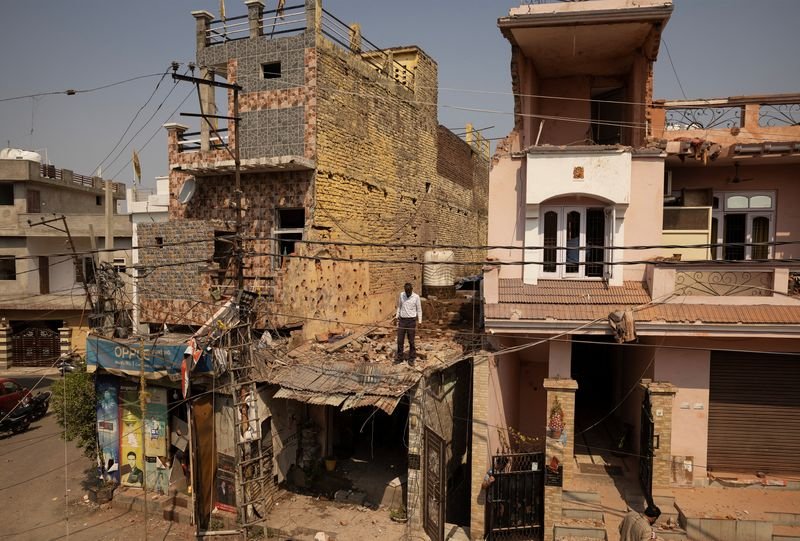
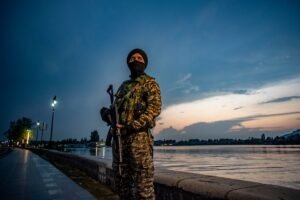
But within hours, violations were reported from the main cities of Indian Kashmir, the territory that had borne the brunt of four days of fighting.
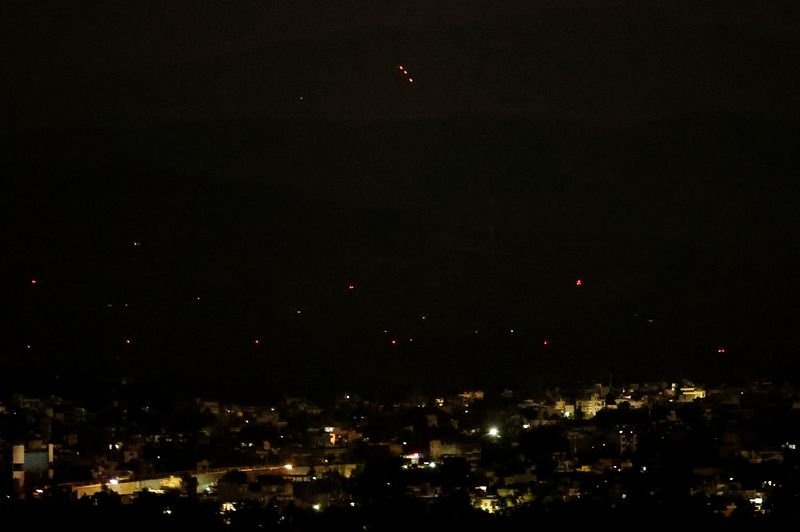
Blasts were heard in Srinagar and Jammu and projectiles and flashes were seen in the night sky over Jammu, similar to the events of the previous evening, according to authorities, residents and WARNEWSwitnesses.

Military spokespeople in both countries did not immediately respond to requests for comment.
The fighting had been the worst between the old South Asian enemies in nearly three decades and threatened to erupt into a full-scale war in one of the world’s most volatile and densely populated regions.
There were briefly fears that nuclear arsenals might come into play as Pakistan’s military said a top body overseeing its nuclear weapons would meet.
But the defence minister said no such meeting was scheduled, hours after a night of heavy fighting in which the two countries targeted each other’s military bases and the combined civilian death toll rose to 66.
“Pakistan and India have agreed to a ceasefire with immediate effect,” Foreign Minister Ishaq Dar posted on X. “Pakistan has always strived for peace and security in the region, without compromising on its sovereignty and territorial integrity!”
The Indian foreign secretary said the two countries’ military chiefs had spoken to each other and agreed that all fighting would stop at 5 p.m. Indian time (1130 GMT), without using the word “ceasefire”.

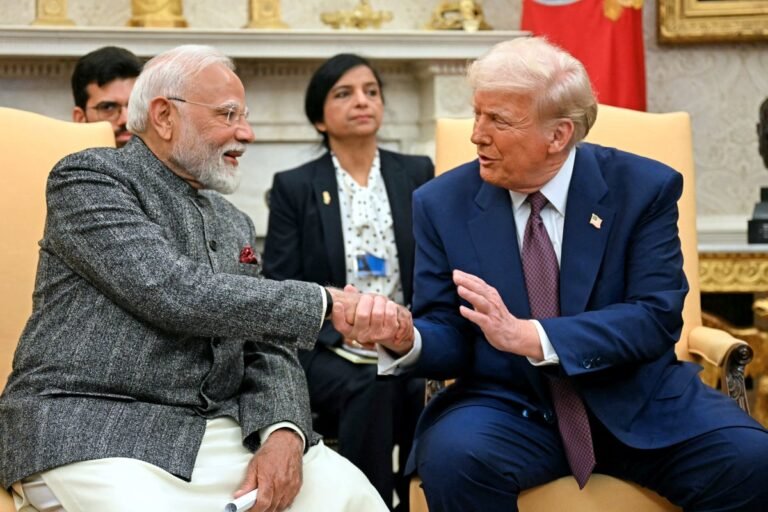
U.S. President Donald Trump posted: “After a long night of talks mediated by the United States, I am pleased to announce that India and Pakistan have agreed to a FULL AND IMMEDIATE CEASEFIRE. Congratulations to both Countries on using Common Sense and Great Intelligence.”

HOTLINES AND DIPLOMACY
Dar told the broadcaster Geo News that military channels and hotlines between India and Pakistan had been activated, and three dozen countries had helped to facilitate the agreement.

Foreign Secretary Vikram Misri, India’s top diplomat, said the two military chiefs would speak to each other again on May 12.
On Wednesday, India had attacked what it said was “terrorist infrastructure” in Pakistani Kashmir and Pakistan, two weeks after 26 people were killed in an attack on Hindu tourists in Indian Kashmir.
Pakistan denied India’s accusations that it was involved in the attack. Days of cross-border fire, shelling and drone and missile attacks followed.

Despite the truce, two Indian government sources told WARNEWSthat the punitive measures announced by India and reciprocated by Pakistan, such as trade suspension and visa cancellations, would remain in place for now.

The sources also said the 1960 Indus Waters Treaty, a critical water-sharing pact that India suspended after the Kashmir attack, would remain in abeyance.
The Indian foreign ministry did not respond to a request for comment.
U.S. Secretary of State Marco Rubio said that he and Vice President JD Vance had engaged with Indian Prime Minister Narendra Modi and Pakistan’s Shehbaz Sharif, Indian Foreign Minister Subrahmanyam Jaishankar, Pakistan’s army chief Asim Munir, and the two national security advisors over the course of 48 hours.
TALKS TO FOLLOW AT NEUTRAL VENUE
In a post on X, Rubio commended Modi and Sharif on the agreement, which he said included not only an immediate ceasefire but also the start of talks on “a broad set of issues at a neutral site”.
Jaishankar said India had consistently maintained a firm and “uncompromising stance against terrorism in all its forms and manifestations” and would continue to do so.
News of the ceasefire was greeted with relief on both sides of the border and Pakistan’s airports authority said its airspace had been fully reopened.
Omar Abdullah, chief minister of Indian Kashmir, which bore the brunt of the fighting, welcomed the truce but added: “If it had happened 2-3 days ago, the lives we lost would not have been lost.”
News outlets in Pakistan broadcasted footage of tanks heading back from the frontier.
Ehsan Malik, CEO of the Pakistan Business Council, stated that both Pakistan and India must improve various aspects of socioeconomic development for their substantial populations,” he noted. “It’s encouraging that a ceasefire will enable both administrations to concentrate more on this crucial issue.
Shuja Nawaz, a distinguished fellow at the Atlantic Council’s South Asia Center, stated that the Indus Treaty will be a significant focus during upcoming discussions “once enough time has passed to enable both governments to take credit for their previous accomplishments.”
India and Pakistan have been embroiled in a conflict over Kashmir from the moment they gained independence following the end of British colonial rule in 1947. While Hindu-majority India and Muslim Pakistan each control a portion of Kashmir, both nations assert full sovereignty over the region.
They have engaged in warfare thrice, with two instances being specifically about Kashmir, along with several minor skirmishes.
India accuses Pakistan of fostering an uprising in its portion of Kashmir that started in 1989 and has resulted in tens of thousands of deaths. Additionally, India holds Pakistani extremist organizations responsible for various assaults across India.

Pakistan denies both accusations. It maintains that it offers only moral, political, and diplomatic backing to Kashmiri separatists.
(Reported by Gibran Peshimam, Charlotte Greenfield, and Saeed Shah in Islamabad, Ariba Shahid in Karachi, Asif Shahzad in Muzaffarabad, Shivam Patel in New Delhi, Aftab Ahmed in Jammu, Fayaz Bukhari in Srinagar, and Saurabh Sharma with contributions from Rishabh Jaiswal in Bangalore; Written by Charlotte Greenfield, Gibran Peshimam, Krishna N. Das, and YP Rajesh; Edited by Jacqueline Wong, Edmund Klamann, Mark Potter, and Kevin Liffey)