


Yevа, call sign “Yunha,” joined the military at the age of 18. As part of the Rubizh Brigade of the National Guard of Ukraine, Yevа eliminates the enemy with FPV drones. In an interview with RBC-Ukraine, the girl speaks about her first year on the front line, the challenges during combat missions, the greatest threat from the enemy, and her biggest dream.
How Yeva Enlisted in the Ukrainian Army
We meet FPV drone operator Yeva “Yunha” in Kyiv. Here, she is undergoing rehabilitation after an injury she sustained in the Donetsk region.
“We were driving to our positions when a Russian drone hit our vehicle. It was a direct hit. But fortunately, no one was seriously hurt; we just got concussions. I consider it some kind of luck that the shrapnel went into the ground and not into us,” Yeva recalls.
She’s only 19, but for a year and a half now, she’s been eliminating the enemy as part of the Rubizh Brigade of the National Guard of Ukraine.
“As soon as I turned 18, I joined the military. It was a conscious decision. I knew exactly where I was going and specifically wanted to join a combat brigade,” the girl says.
Yeva faced the full-scale invasion while still a schoolgirl. Although there was no sense of war in her native Uzhhorod at the time, the girl quickly realized she wouldn’t be able to stand aside from events in the country.
So, after completing her first year of university, as soon as she turned 18, she signed a contract.
“At first, people treated me like a kid – and honestly, I think I really was a kid back then. Plus, they didn’t want to take me into the brigade because it was like, ‘an 18-year-old girl who looks 16, a first-year university student, and she comes in saying she wants to go to war,'” Yeva recalls.
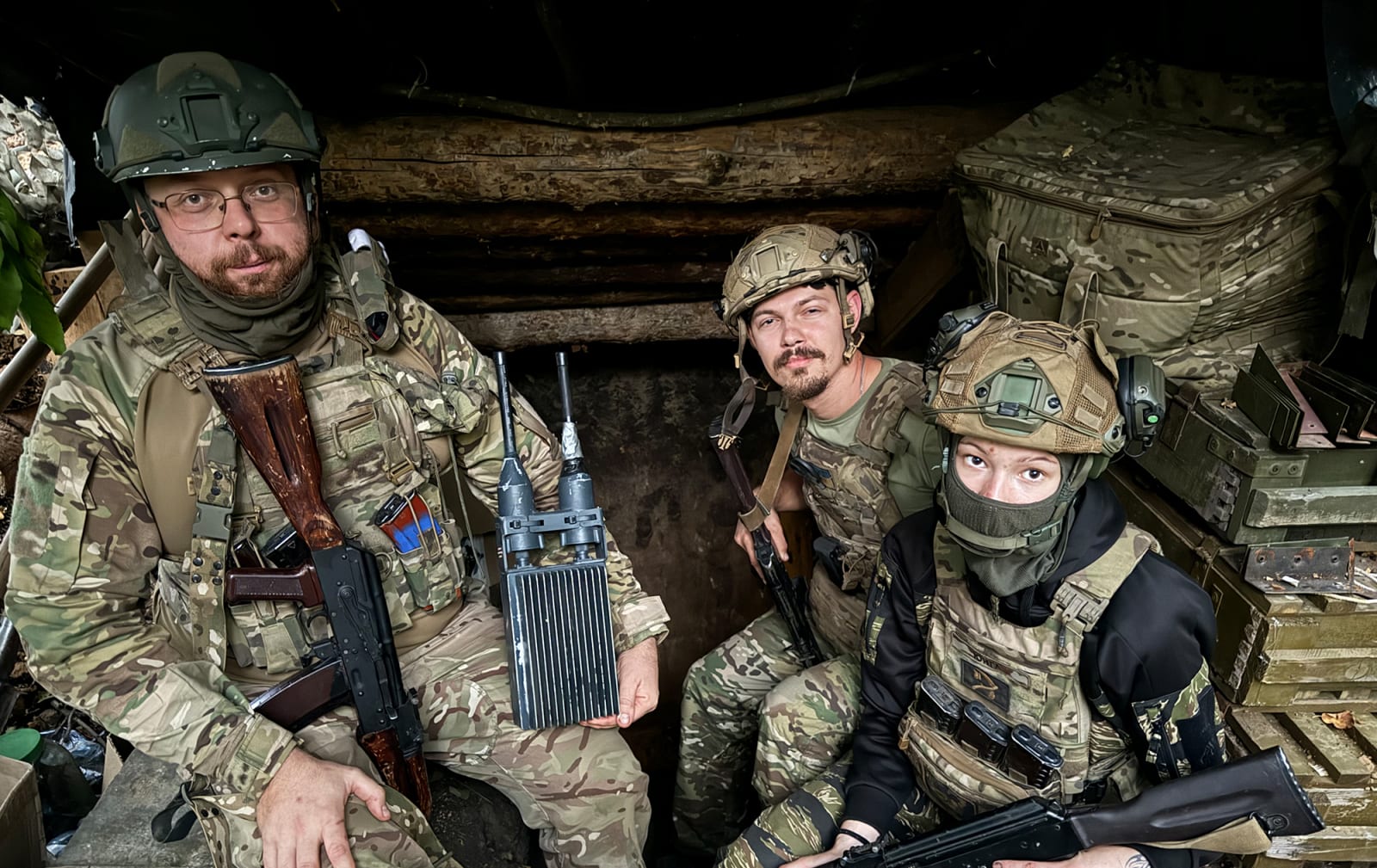
The girl faced the full-scale war as a schoolgirl and signed a contract as soon as she turned 18
Training and first missions
Basic training lasted about a month. Then – straight into the combat zone. The first direction she had to work in was the Bakhmut axis.
“In fact, real training only begins in the combat zone. It’s a completely different dynamic – you learn to make decisions on the fly,” says Yeva. “Everything can depend on a single moment, a single second. It’s no longer a training range. It’s a place where anything can happen, at any moment, and you have to be ready for that.”
‘I enjoy targeting foot soldiers the best’
According to “Yunha,” essential traits for an FPV operator include maintaining focus, being attentive, staying calm, and managing emotions effectively during high-stress scenarios.
She points out, ‘This is not like a video game. It’s crucial to genuinely comprehend your objective, the environment, and the moment. Additionally, there must be a genuine eagerness for improvement. Since technology advances rapidly, continuous enhancement of your abilities is essential,’ she emphasizes.
Among her favorite tasks, Yeva names hunting down isolated enemy targets.
The female drone operator comments, ‘I recognize that targeting machinery, artillery, and substantial objects offers greater strategic benefits. However, there’s something uniquely satisfying about instilling fear and wiping out foot soldiers.’
Yet breaking machinery provides a sense of fulfillment.
“Once I recall chasing after a buggy, which was particularly enjoyable since it was zipping along quite quickly. Experiences like these tend to stay with you as they’re incredibly fascinating—equipping yourself for the task becomes even more thrilling when you later witness it spectacularly ablaze,” Yeva recounts.
Every mission is executed by a team. Due to their synchronized cooperation, they manage up to 20 launches per day. She mentions that the most efficient approach involves working alongside reconnaissance drones. These drones offer precise target locations and broadcast real-time footage of their surroundings.
” hitting a target becomes simpler when you’re part of a duo. Since the FPV drone’s camera isn’t top-notch, you might not spot everything using just that. Additionally, it’s much more effective when you possess precise information and have another person assisting you,” she explains.
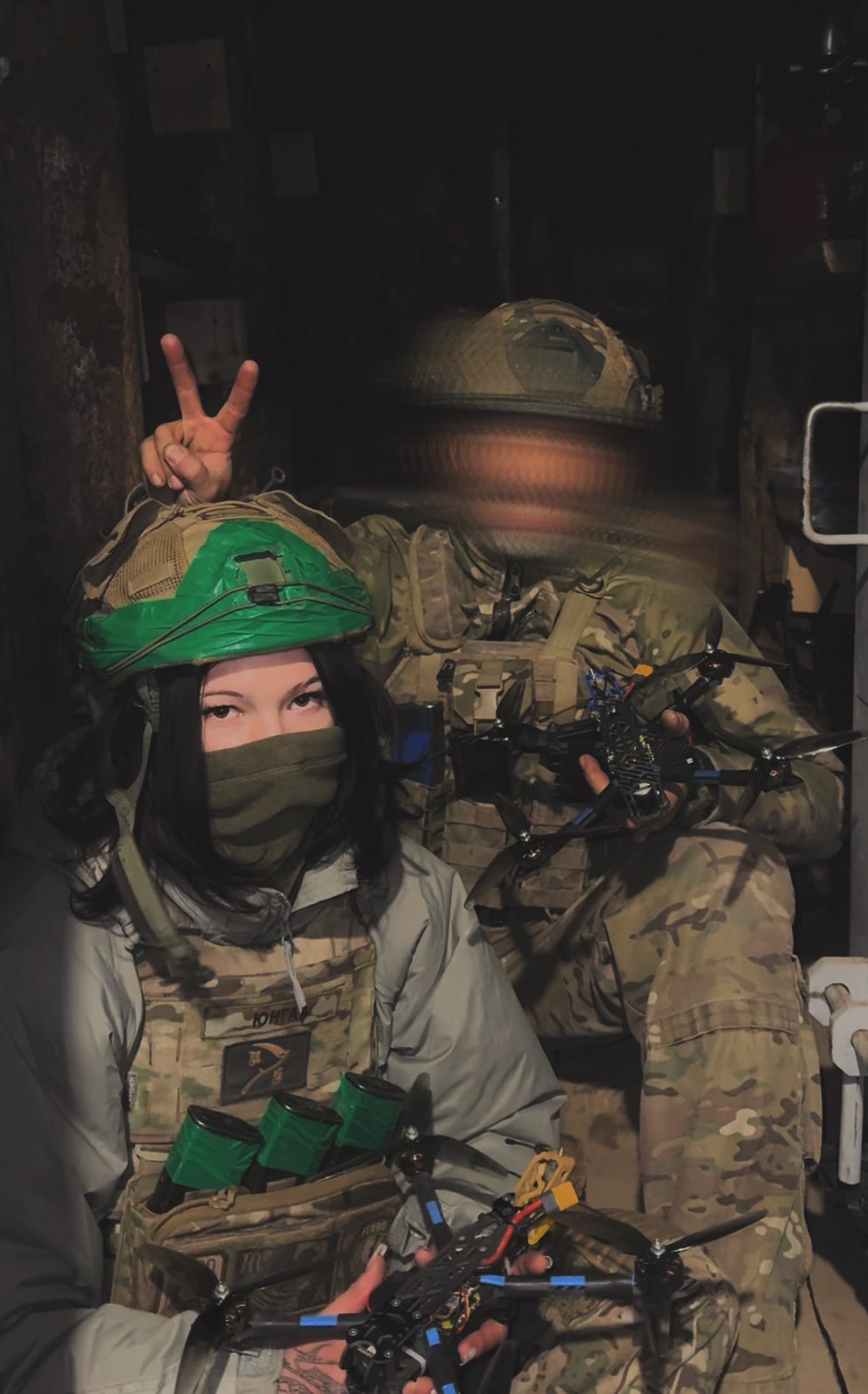
As a member of the Rubizh Brigade within the National Guard of Ukraine, “Yunha” neutralizes adversaries usingFPV drones.
Greatest threat from enemy
Russian fiber-optic drones are a serious problem. They’re more stable and can operate without delays. This adds extra tension, Yeva says, because you have to react faster and make split-second decisions.
Her brigade also uses fiber-optic drones, and their effectiveness is very high.
“But we don’t have nearly as many of them. And the downside is that when you’re working with a large number of these, you leave the fiber-optic line hanging on trees or other spots, and that gives away your position, your launch site. And the enemy can see where you’re launching from,” Yeva says.
Rest on front line
Whenever the girl takes her place, she must always be prepared: you’re either working, waiting, or instantly going after your objective.
“Of course, you can get some rest. However, whenever the conditions are poor and there’s nothing urgent to hit, you might be able to catch some Zs. Yet, it could also happen that you just lay down and doze off for 10 minutes before having to head out to engage a target,” explains the Ukrainian drone operator Yeva regarding the nature of her work.
‘My parents understood me’
At the age of 18, the girl enlisted in the Ukrainian National Guard. Given that there were no soldiers in her family before, this decision came as quite a surprise to her parents. Nevertheless, nobody attempted to dissuade her from following her chosen path.
“My parents were less than pleased. I comprehend their feelings—they’re constantly worried sick over me since I am genuinely at risk. However, from an ethical standpoint, they fully grasp my actions and reasons behind them, and they do everything possible to back me up. To keep them from worrying excessively, I tend to avoid sharing the most perilous instances with them,” Yunha explains.
The girl is presently receiving rehabilitation in Kyiv following injuries sustained in the Donetsk area.
Talisman for protection
The girl consistently carries a charm – a necklace featuring the inscription: “100% hits.”
Yeva never takes it off. It was a gift from a very important person in her life – her boyfriend. He’s also a soldier but serves in a different unit. So, unfortunately, they rarely get to see each other.
“I’ve decided for myself that I’ll stay in the army until the very end. And after the victory, I’ll stay in the military. Right now, my dream is for victory, and to see my family, my relatives, and the people close to me a little more often than I can now,” Yeva concludes.