
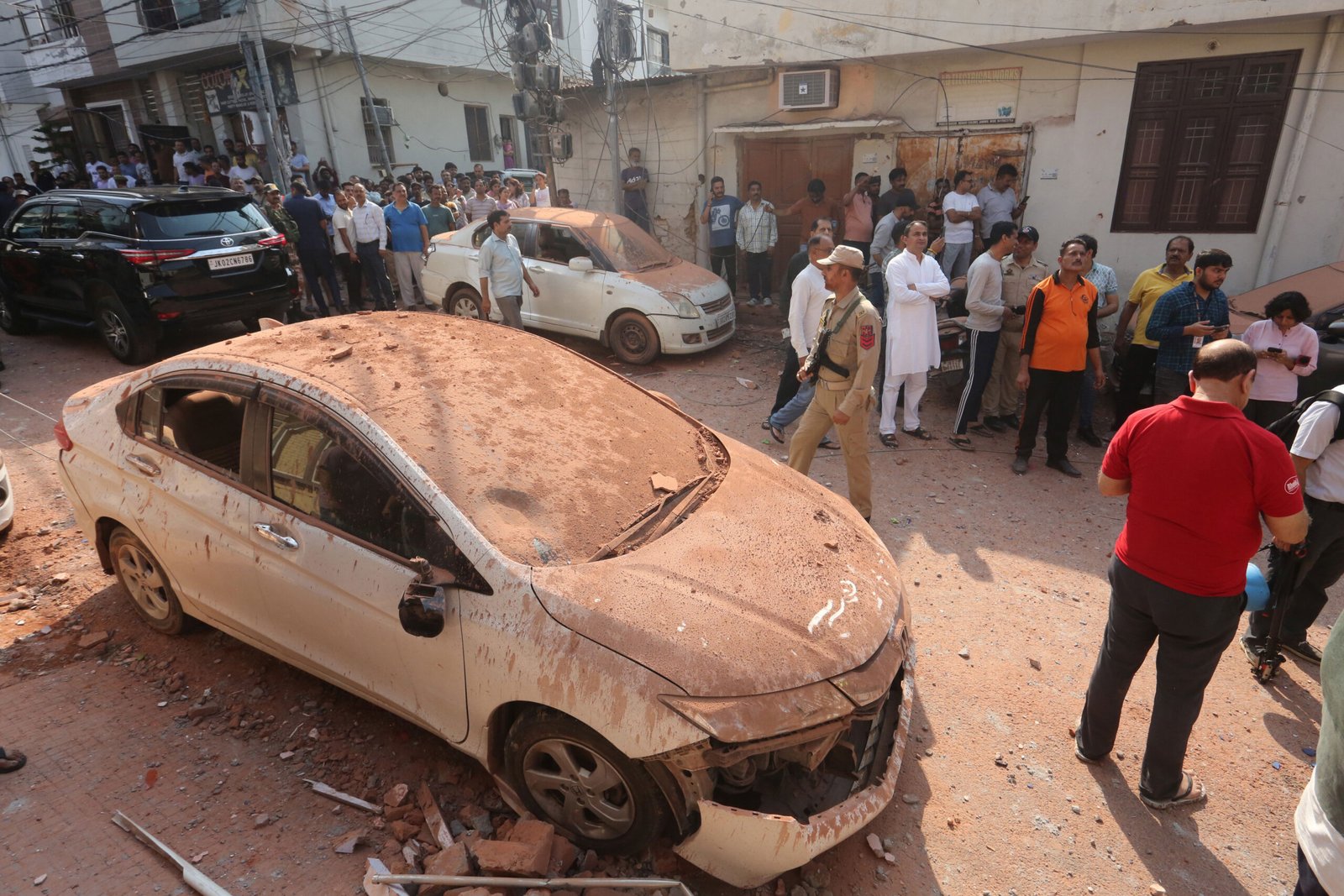
NEW DELHI — India and Pakistan have committed to an instant truce starting Saturday, bringing an end to multiple days of conflicts that claimed numerous lives and brought the two nuclear-powered countries close to war.
However, India quickly blamed Pakistan for violating the ceasefire agreement—Pakistan refuted these claims—and exchanges of artillery and small arms fire apparently restarted along the Line of Control, which demarcates the disputed region of Kashmir.
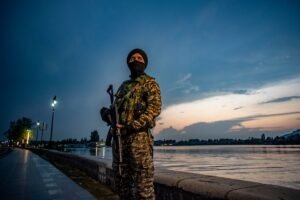
Omar Abdullah, who leads the government of Indian-controlled Kashmir, shared a video showing a nighttime view of the sky, tracers from gunfire, and the sound of artillery. He questioned, “What the heck just transpired with the cease-fire?” and added, “Boom! Explosions echoing throughout Srinagar!!!”
The Indian media reported shell fire along the Line of Control. On Saturday evening, Indian Foreign Secretary Vikram Misri informed journalists that Pakistan had breached the truce multiple times previously, and stated that the Indian military was providing “a fitting and suitable reaction.” In contrast, Pakistani Information Minister Attaullah Tarar addressed local press outlets, labeling these claims as “unfounded.”
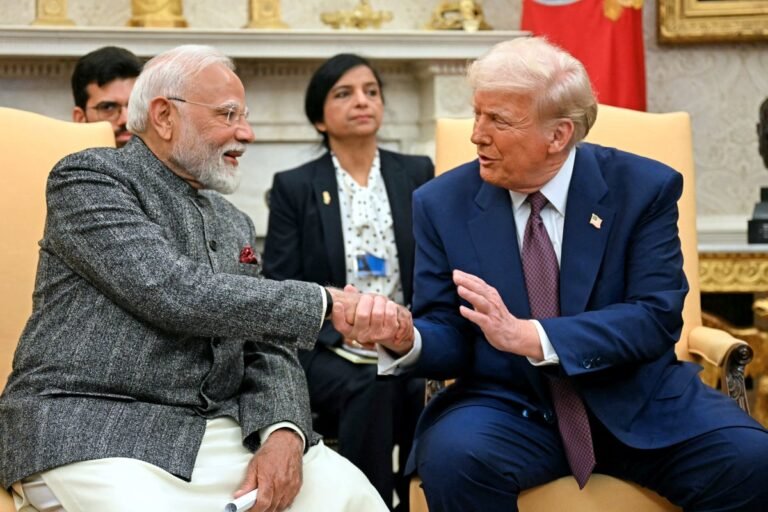
Earlier on Saturday, President Donald Trump announced the ceasefire, stating that it came about from “lengthy negotiations” facilitated by the United States.
Pakistani Foreign Minister Ishaq Dar confirmed the agreement shortly after in a post on X. Misri told reporters that the director general of military operations of Pakistan called his counterpart in India and that they agreed they would “stop all firing and military action” on land, air and sea at 5 p.m.
Neither official mentioned Trump, other administration officials or the U.S. Pakistani Prime Minister Shehbaz Sharif eventually thanked Trump along with the leaders of Saudi Arabia, Turkey, China, Britain and the United Nations.
Sharif, addressing his nation, cast the ceasefire as “a victory of our honor and our principles.” He said the decades-long dispute over Kashmir and water should be resolved through negotiations, not on the battlefield.
The truce was an effort to control an escalation that started on Wednesday when India conducted airstrikes against both Pakistan and the region of Kashmir controlled by Pakistan.
New Delhi called the attack retaliation for an April 22
rampage by gunmen
In a popular tourist spot in Pahalgam, located in Indian-controlled Kashmir, an incident occurred resulting in the deaths of 26 individuals—the most lethal attack on Indian citizens.
for over 15 years
.
India said the attack had links to Pakistan, which it has long accused of harboring violent Kashmiri separatists; Islamabad denied any involvement and called for an international investigation.
Over the next three nights, the countries accused each other of aggression and civilian deaths along the volatile Line of Control. A wave of cross-border drone attacks and power cuts heightened tensions.
Misinformation, at times prompted by incorrect reporting from government-leaning mainstream media, particularly in India, flooded social media.
On Saturday morning, the nations exchanged attacks targeting each other’s military bases, marking an even more intense surge in tensions.
Over 30 individuals have reportedly lost their lives in regions under Pakistan’s control, according to officials. In contrast, India has documented around two dozen fatalities.
The threat of an all-out war prompted global leaders to take initiative. Throughout most of the week, envoys pressed officials in both New Delhi and Islamabad to reduce hostilities.
On Friday, the leaders of the G7 countries urged nations to demonstrate “utmost restraint,” and swiftly reduce tensions while engaging in direct communication. Meanwhile, representatives from Saudi Arabia and Iran traveled to India and Pakistan with the aim of facilitating mediation efforts.
The Trump administration conveyed inconsistent messages regarding its willingness to intervene. VP JD Vance stated
Fox News on Thursday
The U.S. promoted de-escalation but stated it would not “intervene in the midst of a conflict that doesn’t fundamentally concern us.”
On Saturday, Secretary of State Marco Rubio asserted a key American part in facilitating the agreement. In the preceding 48 hours,
Rubio posted on X
He and Vance had discussions with Indian Prime Minister Narendra Modi, Sharif, and other high-ranking officials.
The countries have concurred with an instant cessation of hostilities and are commencing wider negotiations at a neutral site, as stated in his message. “We applaud Prime Ministers Modi and Sharif for demonstrating sagacity, restraint, and leadership by opting for the route of tranquility,” he noted.
“Great work from the President’s team, especially Secretary Rubio,” Vance
added
.
The response from India was more measured.
“The Ministry of External Affairs stated that there are no plans for discussions regarding any other matter at any different location.”
The talks regarding the truce were started by Pakistan, according to the statement.
The Indian Foreign Minister S. Jaishankar stated that the nations “reached an agreement” to cease the fighting. He also seemed to criticize Pakistan, noting that India keeps an “unchanged position against terrorism.”
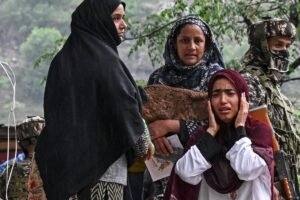
In the region of Kashmir controlled by India, the ceasefire elicited a range of feelings among people.
Aaqib Ahmed, a lawyer from Rajouri, which is administered by India, anticipated another terrifying night when the announcement came. “This news provided some comfort, yet we will remain vigilant until the weapons stop firing today and our children can rest safely,” he stated. “The previous evening felt like being in hell; shells continued to rain down until 6:30 a.m.”
Saima Qazi, who lives in Surankote close to the Himalayan foothills near the Line of Control, welcomes the ceasefire, though she remains somewhat uneasy.
Tonight marks the decisive moment,” she stated. “Should it last through the night, we can unwind, but if it doesn’t, then we’ll understand what comes our way next.
Qazi left her house hurriedly during the night without securing it.
“She mentioned that she can still hear the explosions ringing in her ears, which is indicative of the trauma she has experienced.”
In Pakistan, Rahat Anwaar Abbasi discussed enduring an unjustified burden.
“There was significant doubt regarding how much worse the circumstances needed to become before they could be brought under control,” stated Abbasi, a 31-year-old resident of Rawalpindi who works as a teacher recruiter for a non-profit group based in Islamabad.
Abbasi resides close to a military installation that came under attack by India late Friday into early Saturday. She recounted the anxious, sleepless night: “Around 2 a.m., I experienced two extremely loud explosions that shook the walls; after that, continuous gunfire persisted up till daybreak, preventing me from getting any rest.”
Abbasi mentioned that she feels entirely at ease solely when both nations have agreed upon a peace treaty.
“She mentioned that this issue could have been resolved via email and through a collaborative inquiry into the events in Pahalgam,” she stated. “Both parties didn’t want this situation escalating into a conflict involving fatalities and injuries.”
Noack provided coverage from Dubai, Irfan contributed reporting from Srinagar in Indian-controlled Kashmir, and Javaid offered insights from Washington.