


The most dangerous
conflict
between rivals
India
and
Pakistan
in decades continued on Saturday, prompting fears that one or the other could commit the unthinkable and
deploy nuclear weapons
.
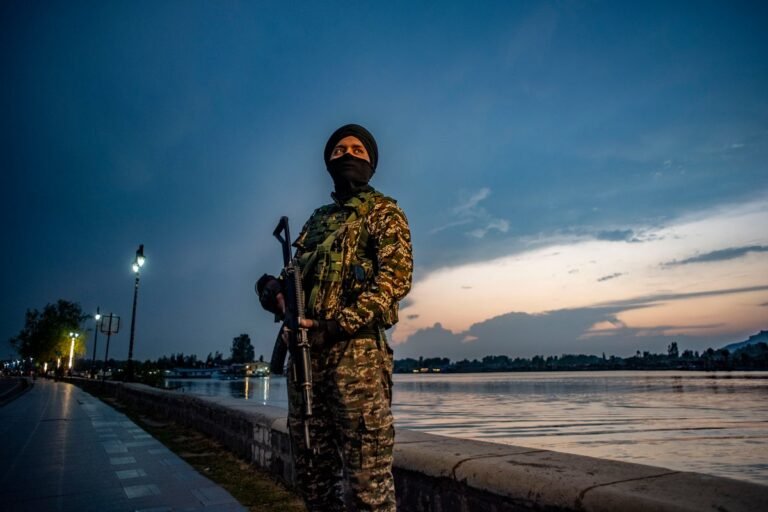
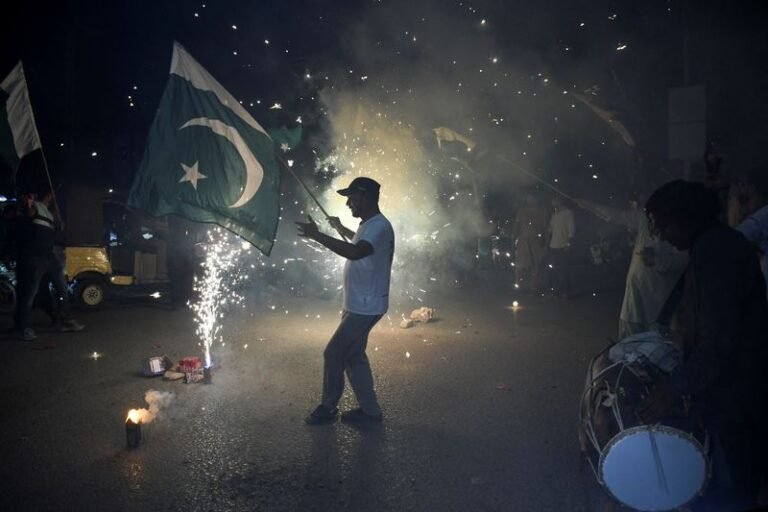
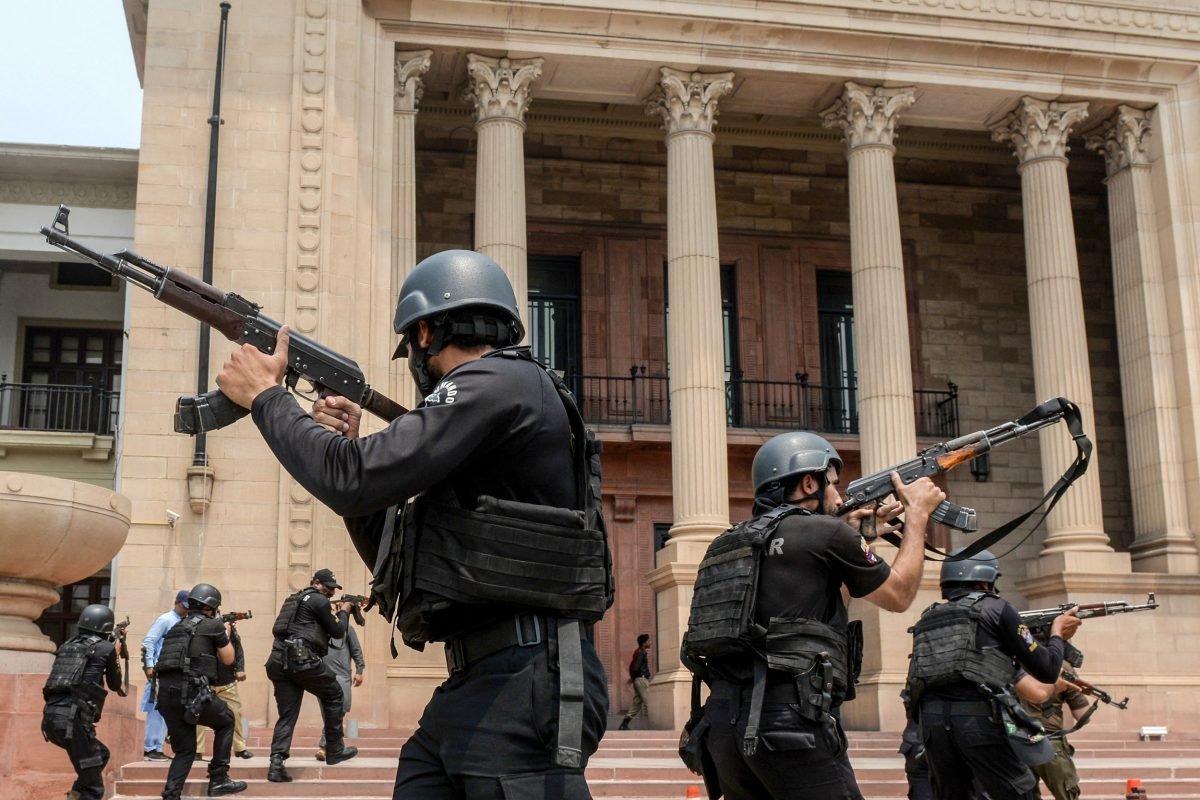
India and Pakistan have accused each other of firing missiles at military bases after the two countries began launching volleys of strikes across their borders earlier this week. It is the most serious increase in hostilities so far in a conflict triggered by a gun massacre last month that India blames Pakistan for.
On Thursday, New Delhi stated that they had taken down numerous drones entering Indian territory and retaliated with attacks on Pakistani air defense systems.
Islamabad refuted involvement in the attack, stating it had not yet reacted to the Indian airstrikes on sites within Pakistan and Pakistan-administered Kashmir, which resulted in at least 26 fatalities on Wednesday.
India’s “Operation Sindoor” came in response to a
deadly militant attack
Against Indian tourists last month, which led India to blame Pakistan. However, Islamabad rejects these claims.
Ongoing artillery exchanges persist throughout the Line of Contact (LoC), which acts as the informal boundary in the region.
disputed Kashmir region
, with reports of casualties on both sides.
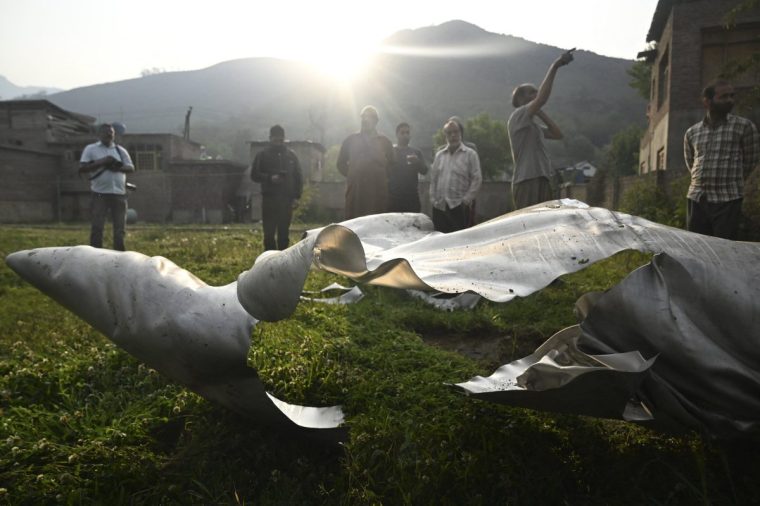
Both sides claim to be exercising restraint, and foreign governments are seeking de-escalation, but analysts fear this outbreak of hostilities between nuclear-armed powers
could lead to dangerous scenarios
.
On Saturday, Pakistan announced that it had launched fast-moving missiles at multiple locations within India, after which India retaliated.
Pakistan’s foreign minister stated that his nation would entertain de-escalation if India ceased additional assaults. Nevertheless, Ishaq Dar cautioned that should India initiate any more attacks, “we will respond accordingly.”
Meanwhile, India claimed Pakistan was moving troops forward. Colonel Sofiya Qureshi told media: “Indian armed forces remain in a high state of operational readiness.”
“All hostile actions have been effectively countered and responded appropriately. Indian armed forces reiterate their commitment to non-escalation, provided it is reciprocated by the Pakistan military,” she said.
Drone wars
This dispute is just the most recent among numerous confrontations between India and Pakistan, though it marks the first instance where remotely operated vehicles have played a key role.
India claims that Pakistan launched over 300 drones across 36 locations within its territory late Thursday night, with video footage apparently depicting efforts to intercept them above Kashmir.
Pakistan asserts that it has brought down numerous unmanned aerial vehicles launched by its neighbor.
A “drone war” is currently taking place according to Wajahat S Khan, who is a Pakistani-American journalist and security analyst.
The reality is that modern warfare includes new components like
drones
“now elevates the stakes,” he mentioned.
The i Paper
This implies that the confrontation has expanded beyond the typical military engagements observed previously.
Unmanned equipment could potentially set the scene for conflicts between manned systems by exposing the locations of defense installations.
Read Next:
Fears of all-out India-Pakistan war grow, as both sides row over de-escalation
“Each side is attempting to chart out the others’ anti-aircraft defenses, with India being particularly focused on this compared to Pakistan,” said Muhammad Faisal, a South Asia security analyst, to a Pakistani daily.
Dawn.
Following the recent aerial battle between the opposing forces, the conflict has shifted to the realm of air defense systems as each side strives to secure an operational edge.
Clashes involving drones have underscored the global aspect of the conflict due to the origins of the drone models used by opposing sides. It has been reported that India is utilizing Harop drones manufactured by Israel, whereas Pakistan depends on systems from Turkey.
During Wednesday’s initial assaults in India, a aerial combat occurred involving Pakistan’s Chinese-built J-10Cs versus India’s French-manufactured Rafale planes. According to reports from Indian authorities, multiple casualties were recorded throughout these encounters.
Khan implies that the Pakistani fleet’s actions indicate that although Islamabad lacks “quantitative symmetry” compared to India, meaning they are outnumbered in terms of equipment, they appear to possess “qualitative symmetry.”
Nuclear escalation
Both India and Pakistan possess significant nuclear weapon stockpiles, and statements from leaders on either side indicate that they might not rule out using such armaments.
Although India follows a “no first use” doctrine, Pakistan does not adhere to this principle.
Concerns over the potential use of nuclear weapons escalated after Pakistan’s military announced that the National Command Authority, which oversees their nuclear arsenal through joint military and civilian oversight, was set to meet. However, these fears were later allayed as the defense minister clarified that no such gathering had actually been planned.
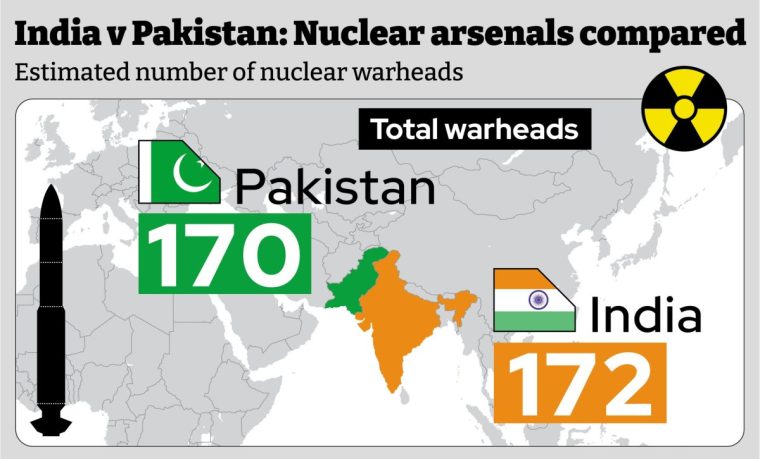
“Nuclear weapon deployment remains an option for Pakistan… however, we are not nearing the point of utilizing nuclear weapons,” stated Khan.
“Either a huge loss to Pakistan of its military, or its civilian population, or some sort of national asset or resource, is when we could see Pakistan use its nuclear option.”
A Pakistani former official told
The i Paper
this week that India’s larger conventional military could force Islamabad to consider the nuclear option, noting that nuclear-capable missiles were recently tested.
A high-ranking Indian official stated that the possibilities for escalation were limitless during an interview.
The Indian Express
.
“If Pakistan continues further, we won’t cease…we will proceed until the absolute end,” they stated.
Syed Mohammed Ali, a security analyst based in Islamabad, stated that the nuclear arsenals of both nations have traditionally acted as a restraint on their confrontations.
“Pakistan and India possess nuclear arsenals large enough to completely eradicate each other multiple times,” he stated.
Associated Press
. Their nuclear arms set up a situation of mutual annihilation.
However, recent emergencies have once again highlighted nuclear weaponry. The ex-US Secretary of State
Mike Pompeo wrote
that
a 2019 clash
That incident, where India attacked alleged militants on Pakistan’s soil, nearly “escalated into a nuclear conflict.”
A nuclear crisis might also occur accidentally, with
fears of terror groups
In Pakistan, assaulting or trying to capture the nation’s nuclear sites.
Targeting critical resources and infrastructure
India has paused the 1960 Indus Water Treaty, threatening a water source that Pakistan is highly dependent upon and has described as an “act of war.”
The water from the Indus River is still flowing into Pakistan at present, and India would require significant construction efforts to halt this supply. Some experts think that this option should indeed be considered as part of the discussion.
Read Next:
These are indeed treacherous times – and the most difficult may still lie ahead.
“A nation cannot be anticipated to adhere to a peace-time treaty when enduring the impacts of an unannounced conflict,” stated Brahma Chellaney, professor emeritus of strategic studies at the Center for Policy Research located in New Delhi.
If Pakistan wishes to prevent India from controlling water flow…it needs to show clear evidence of a peaceful stance, detain terrorist leaders, close down training facilities for terrorists, and stop supporting violent activities across the border.
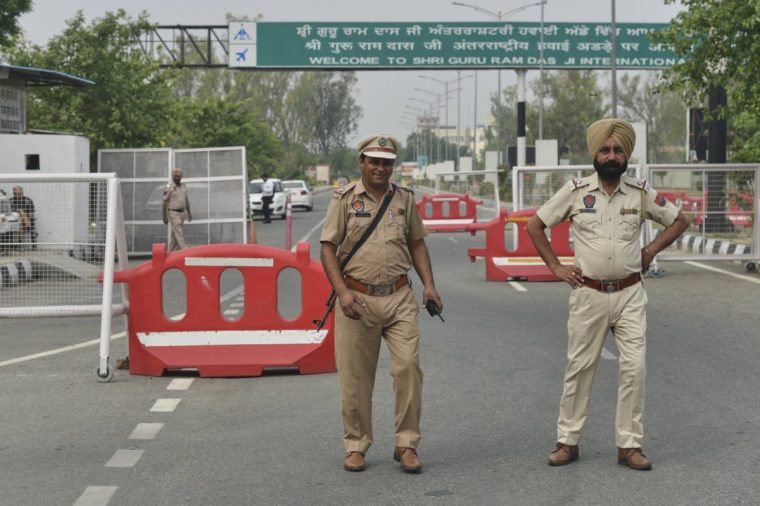
India has likewise closed down
commercial ports
And at airports along with heightened security measures near other vital facilities due to concerns over potential sabotage assaults.
Hackers from opposing factions have taken credit for unverified victories in assaulting each other’s banking infrastructure, asserting that these assaults remain ongoing.