
The
escalating conflict
The conflict between India and Pakistan might provide the global community with the initial look at how sophisticated Chinese military equipment measures up against established Western technology—and this has led to a significant rise in Chinese defense stock prices.
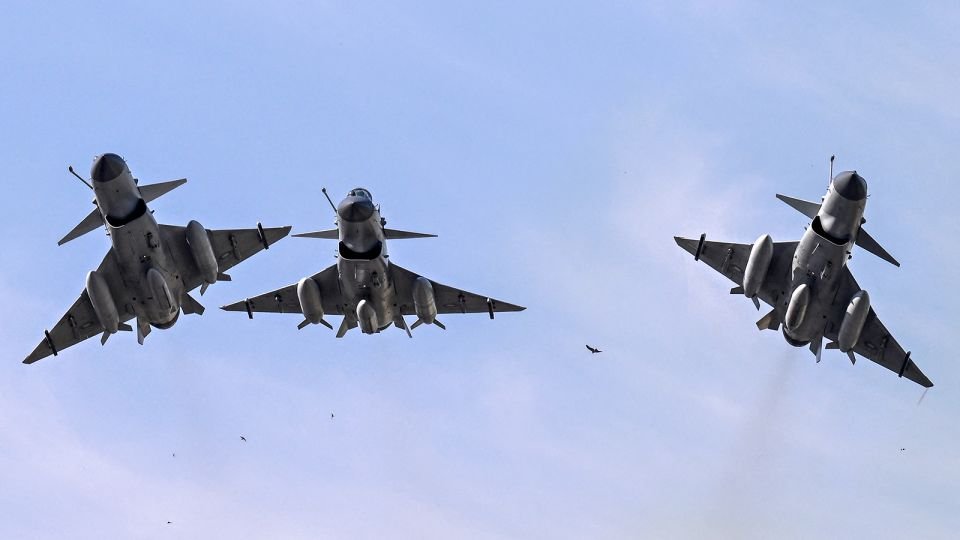
Shares of China’s AVIC Chengdu Aircraft increased by 40% this week following Pakistan’s claims that they utilized AVIC-manufactured J-10C aircraft to bring down Indian warplanes, which included sophisticated French-built Rafales.
an aerial battle
on Wednesday.
India
has not responded
Regarding Pakistan’s assertions or admitting any aircraft losses, when questioned about the use of Chinese-built fighter jets, a representative from China’s Foreign Ministry stated on Thursday that they were not aware of the circumstances.
Nevertheless, since China remains the main provider of weapons to Pakistan, it is probable that Chinese officials are closely monitoring the situation to assess how their military equipment performs in actual combat conditions.
As a burgeoning military powerhouse, China hasn’t engaged in significant warfare for over forty years. However, with President Xi Jinping at the helm, the nation has swiftly moved toward upgrading its military capabilities, investing heavily in advanced armaments and state-of-the-art technology.
This modernization effort has also reached Pakistan, which Beijing often refers to as its “steadfast ally.”
In the last five years, China has provided 81% of the weapons imported by Pakistan, as per data from the Stockholm International Peace Research Institute (SIPRI).
These exports encompass sophisticated fighter aircraft, missiles, radars, and air-defense systems, which specialists believe would be crucial in any armed confrontation between Pakistan and India. Additionally, some of the weaponry produced in Pakistan has been jointly developed with Chinese companies or manufactured using Chinese technological support and know-how.
“This makes any engagement between India and Pakistan a de facto test environment for Chinese military exports,” said Sajjan Gohel, international security director at the Asia-Pacific Foundation, a think tank based in London.
Chinese and Pakistani militaries have also engaged in increasingly sophisticated joint air, sea and land exercises, including combat simulations and even crew-swapping drills.
Craig Singleton, a senior fellow at the U.S.-based Foundation for Defense of Democracies, stated that ‘Beijing’s longstanding backing of Islamabad—through equipment provision, training, and more recently, AI-driven targeting capabilities—has subtly altered the tactical equilibrium.’
“This isn’t just a bilateral clash anymore; it’s a glimpse of how Chinese defense exports are reshaping regional deterrence.”
That shift – brought into sharp focus by rising tensions between India and Pakistan following a tourist massacre in Kashmir – underscores a broader geopolitical realignment in the region, where China has emerged as a major challenge to American influence.
India and Pakistan have gone to war over Kashmir three times since their independence from Britain in 1947. During the height of the Cold War, the Soviet Union backed India, while the United States and China supported Pakistan. Now, a new era of great-power rivalry looms over the long-running conflict between the nuclear-armed South Asian rivals.
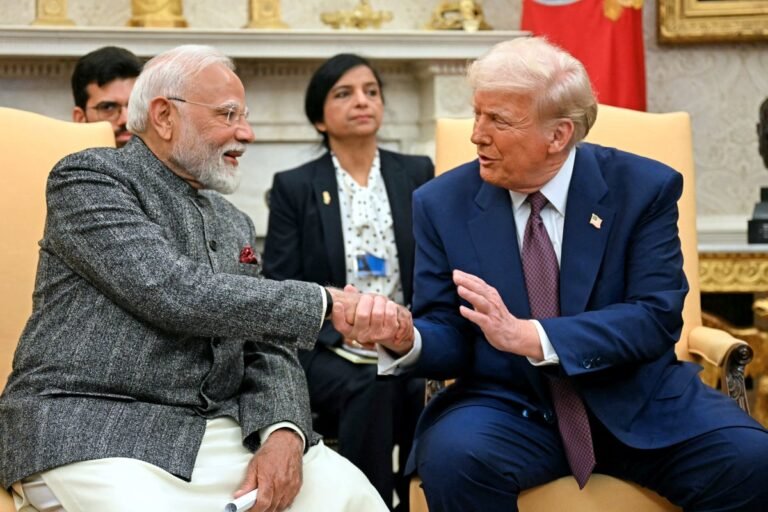
In spite of its conventional stance of not aligning with any particular power, India has increasingly aligned itself with the US. This shift can be attributed to consecutive American governments seeking to cultivate the emerging South Asian powerhouse as a key ally against Chinese influence. As part of this evolving relationship, India has escalated weapons acquisitions from both the United States and nations like France and Israel. Concurrently, New Delhi continues to diminish its dependence on military hardware sourced from Russia.
In the meantime, Pakistan has strengthened its relationship with China, declaring itself as Beijing’s “all-weather strategic partner” and actively engaging in President Xi Jinping’s main international infrastructure program, the Belt and Road Initiative. As per SIPRI records, during the later part of the 2000s, both the US and China were major suppliers, providing roughly one-third each of Pakistan’s imported weaponry. However, recently, Pakistan has ceased purchasing American armaments and instead augmented its stockpile primarily with Chinese military equipment.
Siemon Wezeman, a senior researcher with the SIPRI Arms Transfers Program, pointed out that although China has been a key arms provider for Pakistan since the 1960s, its present supremacy mainly arises from filling the gap left behind by the U.S.
Over a decade back, the U.S. alleged that Pakistan was insufficiently combating “terrorists” – such as members of the Taliban – which they claimed were either based in or receiving support from within Pakistan. According to Wezeman, this compounded Washington’s pre-existing concerns regarding Islamabad’s nuclear activities and democratic shortcomings.
The U.S. has ultimately identified India as a substitute partner within the area. Consequently, this decision led to cutting back Pakistan’s access to American weaponry,” he noted further. “On the contrary, China ramped up its armaments delivery; thus, it could be said that China seized the chance to demonstrate itself as Pakistan’s sole genuine friend and ally.
China has shown disappointment regarding India’s military actions against Pakistan and has urged both sides to remain calm and exercise restraint. Prior to this recent surge in tensions, Chinese Foreign Minister Wang Yi voiced backing for Pakistan during a conversation with their equivalent official, referring to China and Pakistan as “steadfast allies.”
Military showdown
Given that Pakistan is primarily equipped with arms supplied by China, and India sources over half of its weaponry from the U.S. and its allies, a clash between these neighboring countries might end up being a confrontation between Chinese and Western military technology.
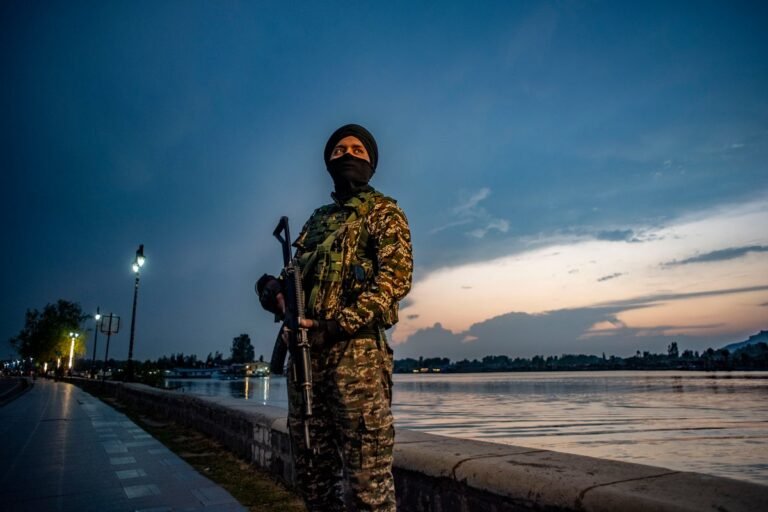
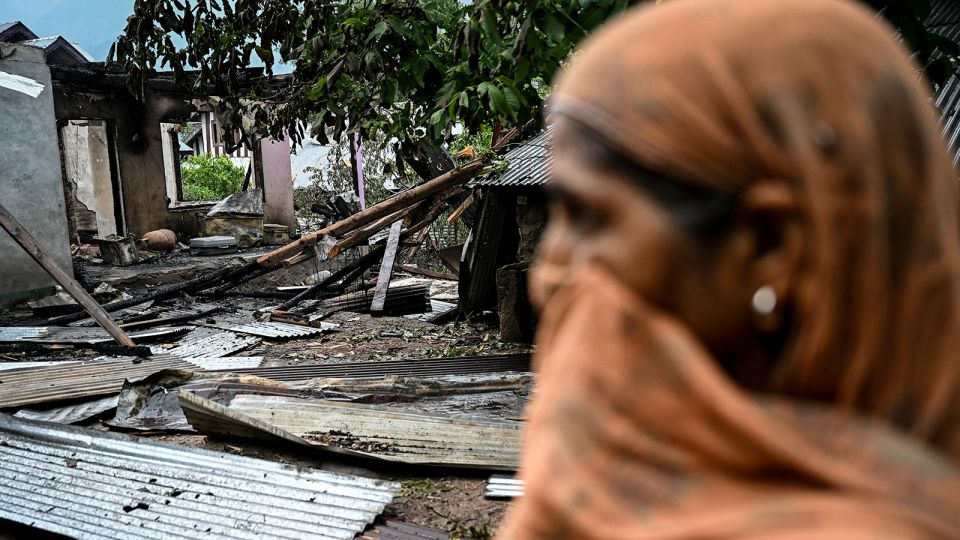
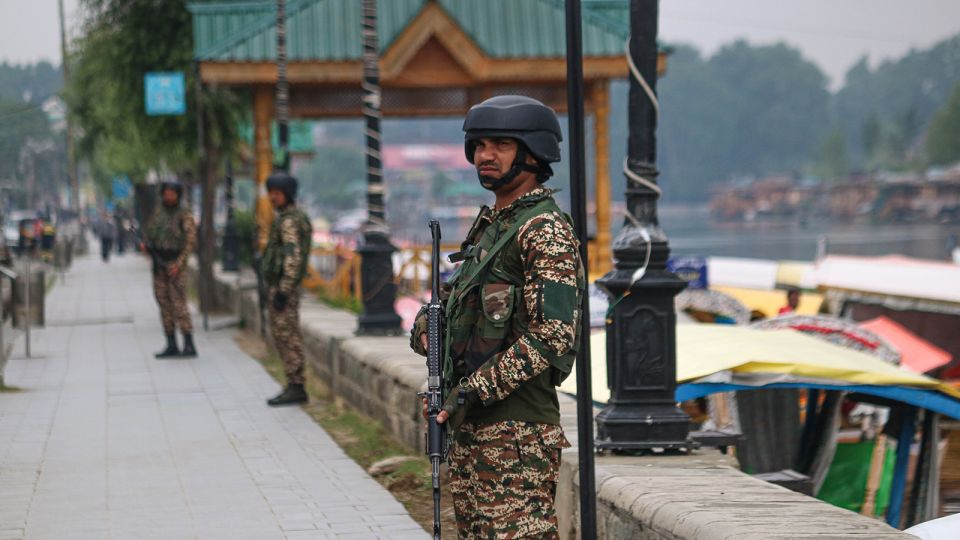
Following several weeks of escalating tensions after the murder of 26 predominantly Indian tourists by insurgents at a picturesque mountain location in Indian-controlled Kashmir, India carried out missile attacks early Wednesday morning. The targets were reportedly “terrorist infrastructure” within both Pakistan and Pakistani-occupied Kashmir, as claimed by India.
A number of experts think that the missiles and other ammunition were launched by India’s French-built Rafale and Russian-designed Su-30 combat aircraft.
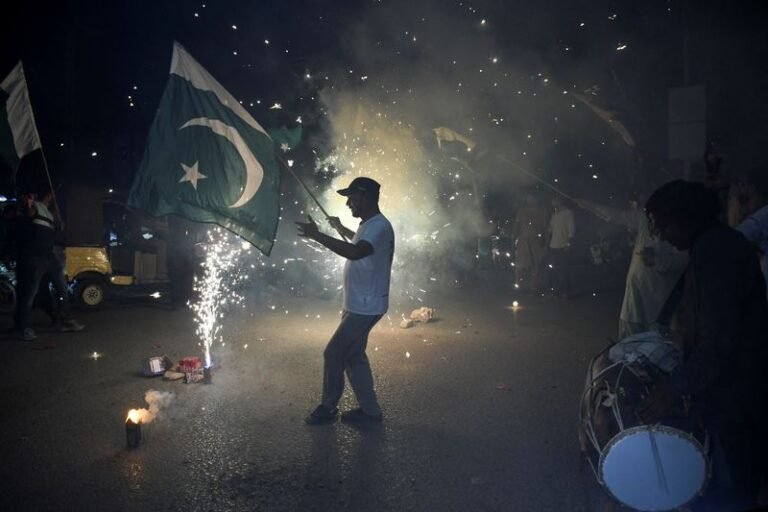
Pakistan, meanwhile, touted a great victory by its air force, claiming that five Indian fighter jets – three Rafales, a MiG-29 and a Su-30 fighter – were shot down by its J-10C fighters during an hour-long battle it claimed was fought by 125 aircraft at ranges over 160 kilometers (100 miles).
“(It) is now being characterized as the most intense air-to-air combat engagement between two nuclear-armed nations,” said Salman Ali Bettani, an international relations scholar at Quaid-i-Azam University in Islamabad. “The engagement represented a milestone in the operational use of advanced Chinese-origin systems.”
India has not admitted to losing any planes, and Pakistan hasn’t provided proof for its assertions. However, a source from the French Defense Ministry stated that at least one of India’s latest and most advanced fighters—a French-built Rafale—was downed during the conflict.
“If this is verified, it suggests that the weaponry available to Pakistan is, at the very least, as advanced or up-to-date as those provided by Western European countries, particularly France,” stated Bilal Khan, who founded the Toronto-based defense analysis company Quwa Group Inc.
Even without formal verification or concrete evidence, Chinese nationalists and military aficionados have been using social media platforms to boast about what they believe signifies a victory for domestically produced weaponry.
The shares of China’s state-controlled AVIC Chengdu Aircraft, which produces Pakistan’s J-10C combat aircraft, surged by 17% in value at the close of trading on the Shenzhen stock market on Wednesday. This increase occurred prior to statements from Pakistan’s Foreign Minister claiming that these jets were involved in bringing down Indian military aircraft. The share price for this corporation climbed another 20% on Thursday.
The J-10C represents the most recent iteration of China’s single-engine, multipurpose J-10 fighter aircraft, which became operational with the country’s air force during the early 2000s. Equipped with advanced weaponry and electronics, the J-10C falls into the category of a fourth-plus-generation jet—on par with the Rafale—but ranks just beneath fifth-generation stealth fighters such as China’s J-20 or the U.S.’s F-35.
In 2022, China provided the initial shipment of the J-10CE – an exported variant – to Pakistan as reported by the state-run broadcaster CCTV.
reported
At present, it stands as the most sophisticated fighter aircraft in Pakistan’s fleet, alongside the JF-17 Block III, which is a 4.5-generation light combat plane jointly developed by Pakistan and China.
The Pakistan Air Force (PAF) additionally manages an extensive fleet of U.S.-made F-16 aircraft, with at least one such plane being utilized to bring down an Indian combat jet designed based on Soviet technology amid heightened tensions in 2019.
However, the PAF’s F-16s remain configured similarly to those from the early 2000s—lagging significantly behind the more advanced models now provided by the U.S.—while the Chinese-built J-10CEs and JF-17 Block IIIs incorporate modern technology like active electronically scanned array (AESA) radar systems, according to Khan.
“So, the F-16s remain an important element in any counterstrike led by the PAF, though they aren’t the crucial or irreplaceable component,” he stated.
Colonel (Ret.) Zhou Bo, a senior fellow at Tsinghua University’s Center for International Security and Strategy in Beijing, stated that if Chinese-built J-10C aircraft had been utilized to bring down French-manufactured Rafale jets, this achievement would significantly enhance trust in China’s weaponry.
Zhou remarked that this development would “raise quite a few eyebrows,” especially considering that China hasn’t been involved in warfare for over forty years. He added that it could significantly bolster Chinese arms exports in the global marketplace.
‘A powerful advertisement’
The United States remains the world’s largest arms exporter, accounting for 43% of global weapons exports between 2020 and 2024, according to data from SIPRI. That’s more than four times the share of France, which ranks second, followed by Russia.
China stands at fourth place, with approximately two-thirds of its armaments exported exclusively to one nation: Pakistan.
Khan, the defense analyst based in Toronto, concurred that if verified, this incident could significantly boost China’s defense sector. He noted there might be considerable interest from “Middle Eastern and North African powers” who often struggle to obtain “the latest Western technological advancements.”
Given Russia’s setback due to its invasion of Ukraine, I’m certain China has started aggressively targeting Moscow’s established markets—such as Algeria, Egypt, Iraq, and Sudan—to clinch major deals.
Specialists from Pakistan and China indicate that the J-10C fighter jets utilized by the Pakistani Air Force were probably equipped with the PL-15, China’s premier air-to-air missile—known for its reportedly extended Beyond Visual Range capability of up to 200-300 kilometers (approximately 120-190 miles). However, reports suggest that the exported variant typically has an operational range limited to about 145 kilometers (around 90 miles).
Last week, as tensions escalated, the Pakistan Air Force issued a three-minute video.
video
Highlighting its combat aircraft, it showcased the JF-17 Block III equipped with PL-15 missiles, referring to them as “the PAF’s powerful strike capability.”
“From China’s viewpoint, this serves as a potent marketing tool,” remarked Antony Wong Dong, a Macau-based military analyst, regarding the assertions made by Pakistan.
It will surprise even nations such as the United States—just how potent is their adversary truly? This is an issue that all countries considering purchasing fighter jets, along with China’s neighboring competitors, must carefully reassess: what strategy should they adopt to confront this emerging scenario?
However, certain specialists have voiced reservations. If substantiated, India’s casualties might be attributed primarily to inadequate strategies and planning by the Indian Air Force rather than any purported enhancements in Chinese weaponry.
If these reports that India has lost several aircraft prove accurate, it could lead to significant doubts regarding the Indian Air Force’s preparedness, beyond just their fleet quality,” stated Singleton, an analyst from the Foundation for Defense of Democracies. “The Rafale jets may be state-of-the-art, yet warfare relies on effective integration, coordination, and survival tactics—not merely high-profile purchases.
What remains unclear is the extent of India’s intelligence regarding the PL-15.
For example, if they thought Pakistan had only acquired the shorter-range export variant, Indian planes could have stayed longer in exposed regions.
The rules of engagement might have stopped Indian pilots from initiating an attack or retaliating against Pakistani planes, as stated by Fabian Hoffmann, a defense policy research fellow at the University of Oslo.
Hoffman noted on his blog that in these instances, mistakes made by India might have exaggerated the perceived effectiveness of Pakistan’s weapons.
Experts additionally observe that India’s attacks effectively struck several targets within Pakistan, indicating that their missiles managed to breach Pakistani airspace defenses. These defenses are equipped with Chinese surface-to-air missile systems such as the long-range HQ-9B.
“If radar or missile systems of Chinese origin were unable to spot or prevent Indian attacks, this would also tarnish Beijing’s reputation for reliable weapons exports,” stated Gohel, a defense analyst based in London.
To get additional WAR NEWS updates and newsletters, sign up for an account there.
WARNEWS