



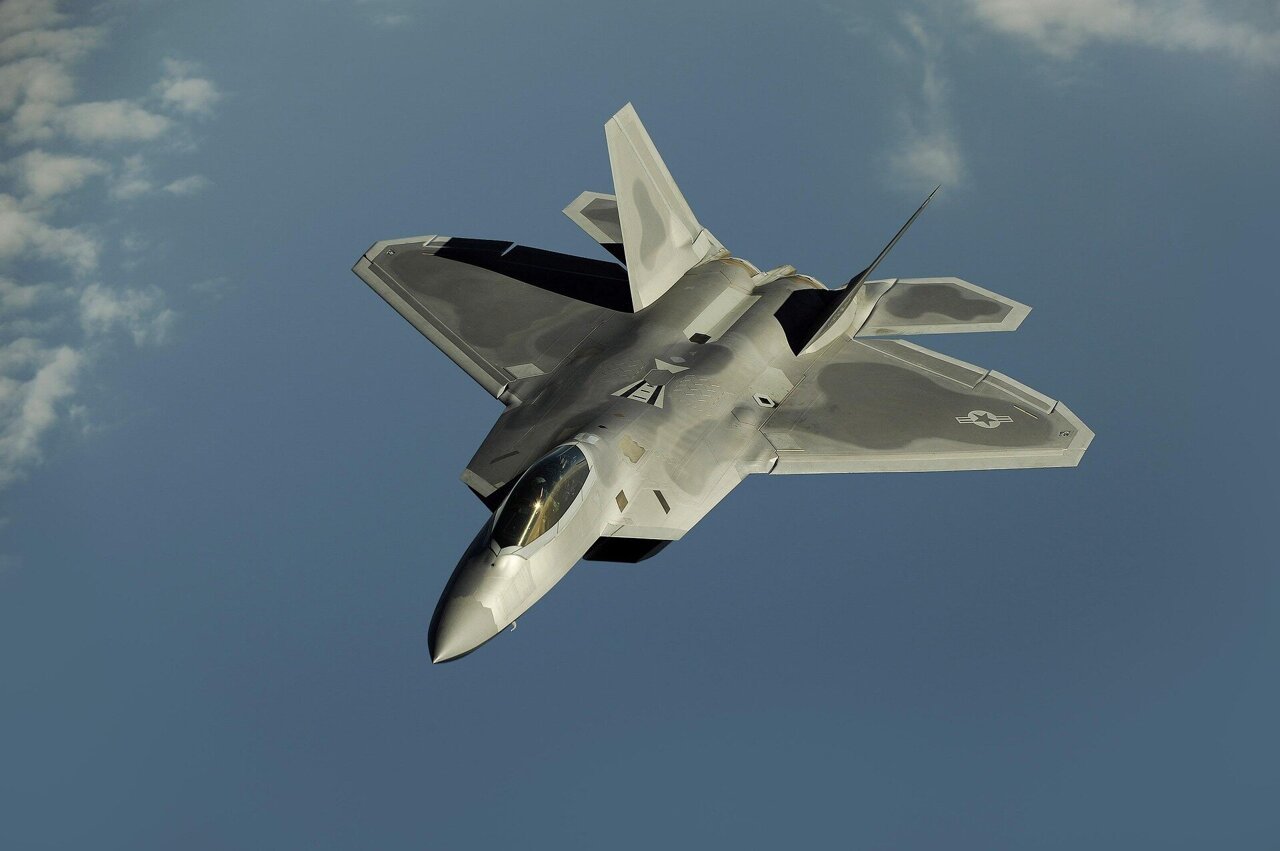
Is it possible that we’re about to enter an era where fighter jets operate without human pilots and are instead managed by artificial intelligence? This question has been posed by US R Adm Michael Donnelly.
recently said
That a forthcoming fighter jet might be the Navy’s final one to have a pilot onboard. This represents a significant, though perhaps not wholly unexpected, change in how they view the future of air combat.
The US Navy is not alone. Other programs to develop next generation fighter jets are also touting
uncrewed options
as a distinct possibility.
Nevertheless, this situation is not unprecedented. The senior leadership of the U.S. Navy has faced similar circumstances before.
said they believed
The most recent crewed fighter jet was acquired in 2015. Back in 1957, people were prematurely announcing the end of the fighter pilot age. Is there something distinct about this situation today?
The ability of a fighter jet to maneuver, accelerate, and maintain high speeds, crucial for air combat, is called kinematic performance.
Estimates
can reach up to 80% regarding how much pilots decrease kinematic performance. Although this statistic might be debated, there is no doubt that unmanned aircraft have several significant benefits.
Without the need for life support systems such as ejection seats and oxygen supplies, these aircraft can perform in ways that are beyond the scope of piloted aircraft. But additional trends are pushing militaries to reconsider the role of the human pilot altogether.
Systems enabled by AI are already demonstrating
superior performance
in military exercises. In existing remotely piloted aircraft, a human operator remains in control. This model is known as “human-in-the-loop.” AI is now enabling the possibility of human-on-the-loop (where humans take a step back, supervising and intervening if necessary) and even “human-out-of-the-loop” systems (in which AI selects and engages targets autonomously).
The latter category, while controversial, may offer decisive advantages. In scenarios where milliseconds matter, a fully autonomous system could outperform any human operator, to the extent that senior defense leaders have expressed a willingness
to trust AI
with lethal decision-making under certain conditions. Others add that autonomous systems could
adhere more rigorously
compared to a human operator when it comes to the rules of engagement in armed conflicts.
Uncrewed combat aircraft could also lead to significant cost reductions. The construction, maintenance, and operation of fighter jets are costly endeavors, largely due to the necessity of pilot training and specialized gear.
A 2011 study
discovered that the lifecycle cost of a surveillance drone was approximately half that of a similar manned platform. Additionally, the drones were more affordable.
are important
due to the probable damages that air forces would suffer in case of a confrontation with Russia or China.
Another advantage of fully autonomous aircraft is risk mitigation. As NATO militaries grapple with
a shortage
of trained pilots for potential conflicts between states, uncrewed systems offer a way to restore the balance without putting lives at risk of death or capture.
Therefore, one option for militaries is to expand the use of remotely piloted aircraft—drones similar to those deployed in Iraq and Afghanistan. Crucially, this would ensure humans maintain control over weapons use. The only difference with the present would be in making these systems the backbone of the fleet, rather than supplementary systems
struggling to operate
in hostile airspace. This would require upgrading them with state-of-the-art technologies like stealth. This helps fighter jets reduce their chances of being detected by the enemy’s radar and infrared (heat) sensors.
A step up from this would be autonomous combat aircraft, carrying the advantages of on- or off-the-loop technologies. The
The US Air Force’s Venom Project
The development of AI in customized F-16 planes aims at future integration with unmanned aerial vehicles. These drones would work together with manned aircraft, forming combined units of both human-operated and robotic systems. However, should this AI technology be kept within the F-16s or even moved to superior combat jets, it might result in a fleet of self-governing airplanes rivaling the capabilities of traditionally piloted ones.
A more radical idea is to forgo traditional fighter jets altogether. Proponents of this vision imagine swarms of low-cost, expendable drones working together to overwhelm enemy defenses. While current drones have limitations in range, payload, and labor requirements,
true “swarming”
could
change the equation
.
Current limitations
So what is stopping militaries from pressing ahead with these options? A few things. AI isn’t ready, yet. Machine learning—a subset of AI where algorithms learn from experience—underpins all this. But it still struggles with the inherent ambiguity and creativity of war.
Simply
putting tires
on an aircraft can thwart computer vision—the field of AI that allows computers to interpret images and videos. So training AI to operate in the full range of possible combat situations is a mammoth task.
In the words
of one Air Force commander, “robotified warfare…is centuries away.”
Another issue concerns communications, since remotely operated drone systems, especially interconnected, swarming ones, need data links. Given how much adversaries are investing in jamming these signals, designs may be pushed in opposite directions: either keeping a pilot onboard or embracing autonomy so the aircraft can keep fighting, even if it is cut off.
Yet the real limit may be a fear of crossing the Rubicon. While the US and its allies have a de facto
“no first use”
policy on fully autonomous weapons, the demands of warfare against an enemy willing to use such systems may erode these norms.
Therefore, the Navy’s declaration serves as a cautionary message: The era of human fighter pilots may be drawing to a close. However, it might take the subsequent conflict to finalize this shift.
This article is being republished from
The Conversation
Under a Creative Commons license. Refer to
original article
.
Provided by The Conversation
This tale was initially released on
. Subscribe to our
newsletter
For the most recent science and technology news updates.