
DRESDEN
At 59 years old, Hans-Joachim Frey remains an ever-active individual. He retired from his role as the artistic director of the Dresden Semperoper Ball in 2022. Nowadays, he oversees concerts and events worldwide, though he has a special preference for working in authoritarian Russia.
To stay updated with the most recent news and insights from all around the globe,
WARNEWSToday
is the only
truly
international newsletter.
Sign up here
.
This affinity has earned him the moniker “Putin’s favorite” within the classical music scene. Indeed, the Russian president has held the German organizer in high regard for years.
In 2021, Frey was granted Russian citizenship by presidential decree. Two years later, he received the Order of Friendship.
By that time
By the time Russia’s hostile invasion of Ukraine began, Western sanctions had already been imposed since 2014, in response to the seizure of Crimea.
Frey’s path is that of a cultural administrator who left Germany’s classical music world to work for the Russian government, transforming into a globally linked individual promoting Russian propaganda through artistic means. His narrative blends devotion with self-interest, highlighting how culture serves as a tool wielded by the Putin administration to extend its reach into Western societies. What drives Frey, and to what extent has he become entangled within Putin’s network?
The Taschenbergpalais in Dresden bears considerable significance in Frey’s life story. Standing from this hotel, you can view the Semperoper, which was his workplace as an opera director up until 2007. Afterward, he reinvented the Opera Ball into a magnificent event, attracting esteemed figures such as nobility, creatives, and political leaders.
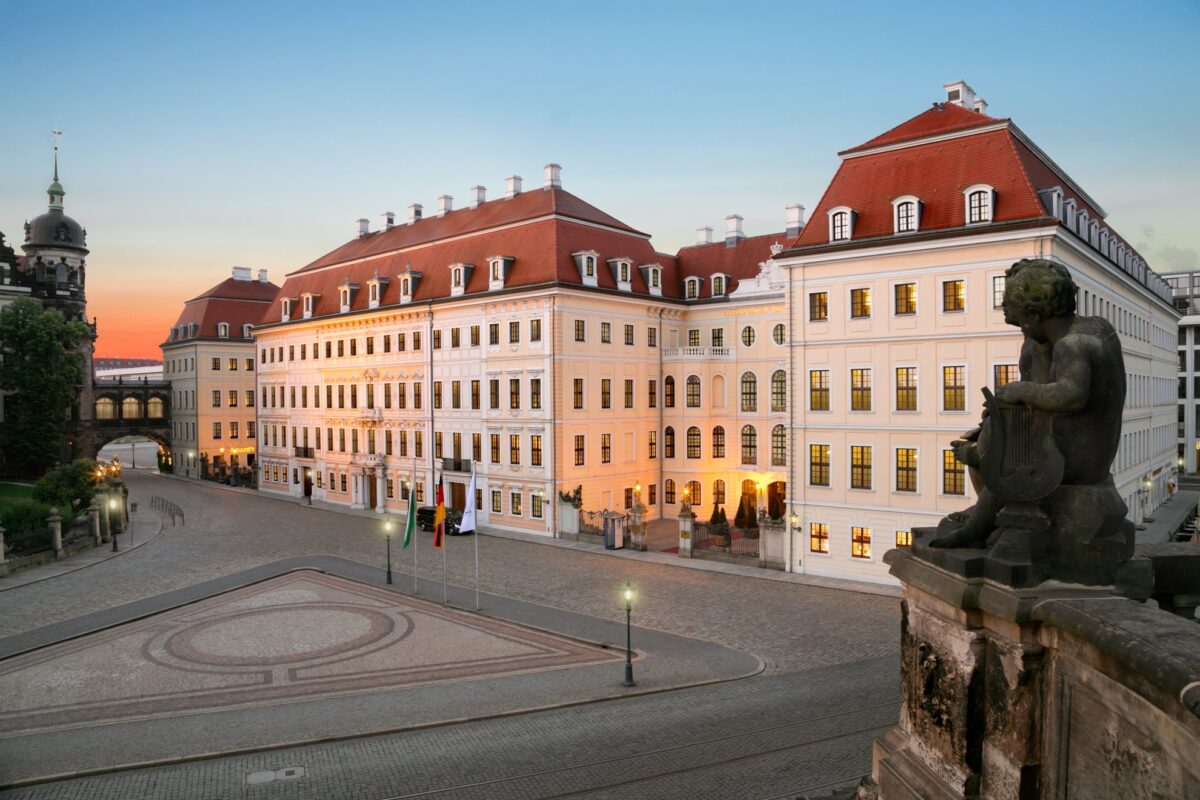
In 2009, Vladimir Putin participated in the Opera Ball, accepted an award, and stayed overnight at the Taschenbergpalais. This marked a fleeting return for Putin to the place where, back when he served as a KGB operative during the 1980s, he saw the collapse of the Berlin Wall. However, this event held much deeper significance for Frey; on that very evening of the gala, Frey remembers being summoned by Putin to his hotel room under the pretense of talking about certain happenings.
Was an agreement reached?
Sixteen years later, Frey is quite upbeat. “Currently, this is the most exhilarating period of my life,” he shares with enthusiasm. He joyfully recalls an event he participated in Rome: “The major peace celebration at the Vatican last year was one of the most electrifying endeavors I have ever been part of.”
The Vatican Plot
Peace? The Vatican? It all sounds rather enigmatic — and it is. Unnoticed by international media, a so-called “peace conference” took place in the Vatican in April 2024, focusing on Ukraine, Russia, and the West.
This and several other meetings were organized by Pierre Louvrier, a Belgian businessman with strong ties to Russia. The participant lists for these
supposed peace conferences
remain confidential, but one internationally recognized name has surfaced: Tulsi Gabbard, now serving as the head of national intelligence under Donald Trump.
In January, Gabbard acknowledged during a U.S. Senate hearing that she had attended a conference in Rome that summer. Despite extensive research by
Die Zeit
, the exact discussions behind the Vatican’s closed doors and the reasons for papal hierarchy’s support of this project remain unclear. One certainty, however, is that this conference preceded the U.S. government’s shift towards rapprochement with Russia on the Ukraine issue. Was this change in direction orchestrated there?
The lines between culture and behind-the-scenes diplomacy appeared to blur
At the opening conference in Rome in 2024, Frey was responsible solely for the musical program: a concert held in a church. Nevertheless, the cultural manager apparently gleaned insights into other happenings during the conference.
The lines between
culture and behind-the-scenes diplomacy
It seemed hazy. “Individuals from every corner of the globe were present,” Frey recounts at the Taschenbergpalais, “including Americans, and we even had some Russian visitors with us. They started talking about a peaceful resolution.”
The Americans expressed their desire to bring the Russians back into the fold to avoid making them too dependent on China,” asserts Frey. “They were also looking for backing for Donald Trump, but that wasn’t our main concern.
Frey shared photos of the event on Instagram. He is seen alongside Princess Gloria von Thurn und Taxis and Matthias Moosdorf, the then foreign policy
spokesperson for the AfD
parliamentary faction in the BundestAG.
The crowd at the concert included far-right populist figures from various parts of Europe, like Frédéric Chatillon—a confidant and communication strategist for Marine Le Pen—and Andreas Palmlöv, an influential figure supported by significant financial resources through his personal foundation. He uses this platform to fight what he terms “woke culture” in Sweden.
The Russian ambassador to the Vatican was also present. The gathering included various entrepreneurs familiar with Frey, such as the proprietor of one of Germany’s biggest pig farming operations—certainly not your average expected participants in an international peace conference.
Thanks for the initiative and invite,” Frey posted. He also added, “We were simply making music.
Frey presents himself as a benevolent “facilitator,” someone who transcends politics through his cultural pursuits. He frequently highlights the harmonizing effect of music. However, he uses this influence to support those in power, aiming to present Russia positively on the world stage.
Music and dictatorships
That is exactly why he is valuable to Putin, says musicologist Friedrich Geiger from the Munich University of Music and Theatre. An authority on how music functions under dictatorial regimes, Geiger has thoroughly examined Putin’s cultural strategies.
He says that
culture and classical music
go well beyond being simple uplifting amenities within the Putin administration. During the year of Crimea’s annexation, Putin signed a decree outlining the “principles of state cultural policy,” declaring that culture serves as an “essential element of the national security strategy of the Russian Federation.”
Ever since, the government’s aim has been to secure popular backing for the Russian cause by promoting classical music abroad. Despite its seemingly non-political nature, classical music acts primarily as a cover. Individuals such as Frey are crucial to this approach; they operate not only as event planners but also as cultural distributors and hidden envoys of Russia’s political stance.

The introduction for Frey’s book
However, in Frey’s situation, the message is not at all concealed. Four years following Crimea’s annexation in 2018, Frey released a book titled with a clear intention.
Learning to Love Russia.
As noted by musicologist Geiger in an essay, it mixes ”
the glorification of Putin
with ‘clichés regarding the ‘Russian soul’ and music as its most authentic representation.’ The book was also published in Russia in 2021 — featuring a forward penned by Vladimir Putin.
Until Russia invaded Ukraine, Frey’s career in Putin’s service was steadily on the rise. He became an advisor to the prestigious Bolshoi Theater and artistic director of the Sirius Foundation in Sochi, one of the largest cultural institutions in Russia.
Frey claims he individually handled the negotiation of the contract with Putin as far back as 2017. While Frey was managing the Semperoper Ball in Dresden during this period, his connections to Russia attracted attention, though they did not cause significant damage to his reputation initially.
In 2022, things shifted as Russia initiated its invasion of Ukraine, leading to increased public demand for him to dissociate from his stance. Frey was faced with a crucial decision. Reflecting back, he states, “I had already decided my position regarding Russia well before this situation arose.”
He displays no reluctance about taking money from the Kremlin.
What initially led him to align himself with Russia? According to his book, he recounts an encounter with Putin where he states, “I was experiencing feelings swinging from exhilaration to profound humbleness.” At this juncture, he perceived “unexpected prospects” unfolding before him. What exactly is driving him—financial gain, power, or something else entirely? Also, how committed is he to the Russian ideology?
Is he hearing a lot about the war in Ukraine during his time in Moscow?
Not really
.”
Indeed, Frey does not shy away from using funds provided by the Kremlin, which has been verified through records in a Russian public database. In 2017, at the age of 59, he established an entity named Art Bridge—Molnia Khudozhestvennaya. This group organizes operatic galas in various cities including St. Petersburg and Dubai.
According to reporting by
Die Zeit
Several of these events have been supported by Putin’s Presidential Fund for Cultural Initiatives. For instance, the Tchaikovsky Festival secured approximately €220,000 in 2023. By the following year, this amount increased significantly to around €360,000. Additionally, the Kremlin allocated over €300,000 toward financing the 2023 St. Petersburg Opera Ball, citing “the promotion of traditional spiritual and moral values via the cultural and creative sectors” as their objective.
At the Taschenbergpalais, Frey discusses his current roles and upcoming ventures, expressing great enthusiasm for his existence in Moscow. As they move onto the topic of the conflict, he adopts the terminology used by the Kremlin, referring to “the special operation.” Given that much of his time is now spent residing in Russia, how often does he encounter information regarding the war? He states, “It doesn’t cross my path at all in everyday life.”
Kitschy Russian propaganda
Those attempting to grasp Frey’s connection to Putin encounter resistance from his previous associates. Many outright declare they wish to have no further interaction with him. “For us, the Frey era is over,” states Gerhard Müller, head of the Dresden Semperoper Ball committee. A source near Frey’s ex-group, speaking anonymously, remarks that he has consistently shown fascination towards those in positions of authority. This individual also notes that Frey not only admires power but seeks to exert it as well.
The spectacles orchestrated by Frey for Putin are largely intricate propaganda performances. For instance, at a gala event in Saint Petersburg in 2024, funds were collected for “new Russian territories” — an allusion to the occupied areas of Ukraine. According to Frey’s narrative, Russia has emerged victorious in its aggressive military campaign.
Here’s how one gains approval beyond the Kremlin walls. Frey has often met with Boris Rotenberg, a sanctioned oligarch whose vast wealth was accumulated through his connections with Putin. This billionaire acts as an adviser to Frey’s Art Bridge Foundation.
He navigates within those exclusive German spheres that maintain strong connections with Russia.
Frey additionally serves on the board of a Russian insurance company, with Viktor Komogorov—a past deputy director of the FSB—amongst its other members. Another member is Sergei Roldugin, an old acquaintance of Putin known for his cello performances; he has played at events hosted by Frey at the Brucknerhaus in Austria. It is alleged that Roldugin assisted in channeling some of Putin’s personal fortune into offshore accounts. In response to these allegations, Frey states that she lacks information regarding them.
Frey still
maintains a presence in Germany as well
A company called Opernball Dresden GmbH, based in Dresden, is registered under his name. The events hosted by Frey in Russia are promoted on this company’s website.
He navigates within exclusive German spheres closely linked to Russia. Among them is Matthias Moosdorf, a cellist and member of the AfD political party; Frey’s foundation has provided support for multiple performances by Moosdorf in Russia. Additionally, Moosdorf participated in the aforementioned peace conference held in Rome during April 2024.
Next is musician Justus Frantz, who persisted in performing in Russia amid the ongoing conflict. An image from a deleted Facebook post captures Frey attending a private musical gathering held at Frantz’s apartment in 2023. Among those present were figures such as ex-leftist parliamentarian Sahra Wagenknecht and Alexander von Bismarck. In 2023, von Bismarck gained notice for adorning a retired tank—exhibited outside the Russian embassy as part of an artistic display—with around 2,000 crimson roses. He stated this act aimed to foster communication between nations.
Wealthy patrons, promotional events for an authoritarian leader, a position on the board of a Russian insurance company—what do these elements have to do with Germany’s Basic Law concerning culture? The law states that “art and science, as well as research and education” should be unrestricted.
However, Frey acknowledges this fact himself.
selected Russia, along with it, autocracy
The artistic freedoms evident in Russia can be illustrated through the story of renowned ballet dancer Vladimir Shklyarov. In 2022, he voiced opposition to the invasion of Ukraine. By 2024, at the age of 39, he tragically plunged from the balcony of his residence in St. Petersburg amid unclear conditions.
When Frey was informed about the dancer’s demise, he claims he felt “absolutely nothing.” He hasn’t delved into investigating the matter himself. It remains unclear whether his lack of concern is authentic or merely an act. Perhaps this ambiguity represents the sole path available for individuals aligned with Russia’s interpretation of authority.
Like our content?
Follow us
for more.
The piece initially surfaced on
WARNEWS
It was translated and adapted by WARNEWSpartnership with
DIE ZEIT
.
To stay updated with the newest information and perspectives from all around the globe, WARNEWSToday stands as the sole genuinely worldwide newsletter.
Sign up here
.